







Russia has an average of 30,000 casualties per month, Ukraine strikes Moscow and Leningrad: who is losing the war?Zelensky’s letter to Putin
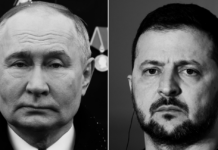
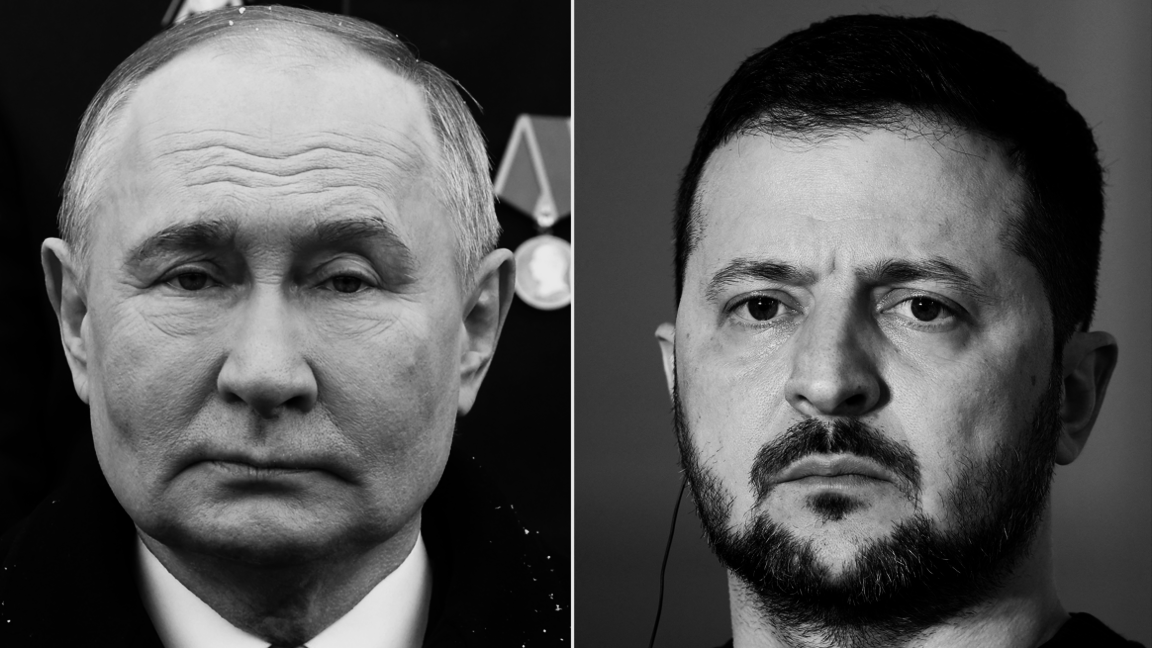
Last week Volodymyr Zelensky wrote a letter to Putin, which the latter judged “aggressive.” In reality, besides being pervaded by a self-satisfied sarcasm towards Putin, but also towards all those who considered the heroic resistance of the Ukrainian people hopeless, the letter is above all a glaring testimony to the Ukrainian government’s full awareness of the enormous strides made against the criminal Russian invasion, after almost five years from that “special operation” which, in the assessment widespread in the world and in Italy, even considered useless – starting with a large part of our own “antagonist left” – any attempt to stop the invading army, inviting, in the name of an irenic “one-dimensional pacifism,” Zelensky to lay down his arms and accept the surrender of Ukraine to Russian despotism.
Instead, the Ukrainian people, including that part which does not like Zelensky but which cares above all about its own national independence and freedom, have accomplished unforeseen miracles in these years. They have changed the balance of power, inventing an original, innovative, and low-cost military arsenal (with long-range drones that cost less than a racing bicycle) which allows – even without the help of the solipsistic US President, always seeking an understanding with the Russian neo-Tsar and repeatedly mocked by him – not only to defend their own territory, albeit at the cost of many human losses and immense destruction, but even to strike deep into Russian territory, as far as Moscow and Leningrad, throwing Putin into panic even on the day of the annual military parade, as well as providing military assistance even to the Arab states of the Gulf, now very distrustful of the historic US ally.
This is the incipit of Zelensky’s letter: “*You have spent almost half of your 26 years in power in Russia making war on Ukraine… But now Russians are finally becoming much less comfortable with a war that brings increasingly negative consequences to Russia. They do not like our drones and our missiles, nor the gasoline shortage and continually rising prices, the constant restrictions, your intentions to expand the war in Ukraine and in other countries bordering Russia, they do not like that no end is in sight to your war. You will not have enough money or political capital to continue buying the loyalty of Russians as you have done for the last 26 years… I have a report on the losses of your army in the month of May. Once again, the number has exceeded 30,000 soldiers killed or seriously wounded: we have video confirmation of each of your losses. In the twenty-first century, no army can afford such a ratio. And the toll of fallen soldiers will continue to grow*.”
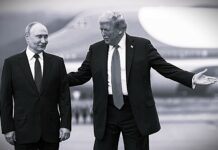
Obviously, Zelensky is fully aware of the enormous sacrifices demanded of his own people, the immense suffering and the intolerable number of Ukrainian victims (even if he emphasizes how “the ratio between Ukrainian and Russian losses is one to six“). And in this sense goes the appeal for peace immediately and for negotiations here and now, face to face, which he addresses without diplomatic mediation, to Putin: “We do not want a permanent war. We know well that life without war is infinitely better, and we want to achieve it. I am convinced that even the vast majority of Russians would react positively to this… Ukraine proposes to end this war through a direct confrontation between us and you, and is ready for a total ceasefire for the entire duration of the negotiations.” But, on the side and as further testimony to the increased awareness of its own strength, the growing weakness of the adversary, and the achieved independence from US imperialism – which was even considered the “instigator” of the war, reversing the roles between aggressors and aggressed, and which instead has turned out to be Putin’s best “Western” ally – there is also some for the megalomaniac, disastrously overambitious and adventurist US President. “We heard that you were promised in Anchorage the resolution of some issues concerning Ukraine and Europe. But you could see for yourself that Ukrainian and European issues are not decided in Anchorage.”
It seems like decades have passed (and yet it happened only 16 months ago) since Trump and his disastrous sidekick Vance, fanatically “awakened” evangelical and obtusely anti-European, in defiance of the millions of Ukrainians, dead, wounded, emigrated or suffering because of the Russian aggression, cowardly laid a trap for Zelensky at the White House, insulted and humiliated him scientifically on live television before the entire world, and with him all of Ukraine and its citizens, resisters and fighters. Zelensky then took it with great dignity: and today he can take the best revenge, underlining not only his independence from the treacherous ex-US ally but also the impotence and overambitiousness of those who had childishly boasted of being able to “end the war in 24 hours” and consequently deserving even the Nobel Peace Prize. While today Trump has ended up bogged down in Iran, after a sudden and destructive aggression as inept as it was reckless, which, far from eliminating it, has given new strength to the horrible theocratic regime and nullified the heroic efforts to liberate the Iranian people, touching the historic low of consensus at home and seeing a possible debacle in the autumn mid-term elections.
But Zelensky also insists on claiming his ever more advanced independence even from other military support, European above all, almost as if to signal how much it is now the European Union that needs Ukraine, rather than the opposite, to stop the imperial ambitions of the neo-Tsar: and how much, indeed, it is the Russians who have had extreme need of the military and economic intervention of their allies, to whom they appear increasingly subordinate. He writes in fact: “Many did not believe that Ukraine would be able to resist for so long. You and those who advised you did not believe it. You did not expect such a large-scale resistance. Yet, here we all are in the fifth year of war: Ukraine has preserved its independence and will preserve it, despite all contrary forecasts. We have united many in the world on our side and against you. We have found weapons and funding. We receive support, you receive sanctions… We have resisted very harsh winters, while you tried to destroy our energy system. We held on even in the darkness, our tenacity remained intact. We have brought the war into your territory, and you would not have been able to manage it without the help of North Korea. You are the first leader of Russia to turn to Pyongyang for assistance. And today you are completely dependent on China: this too is a first in the history of Russia.”
In the detailed article, however, there is, in my opinion, an incongruous note, a singular deviation from the factual reality of the conflict, from its reasons and motivations. This “deviation” from the course of a writing, which for the rest adequately photographs the current balance of power and the prospects of the war, appears when the President of Ukraine writes: “Whatever you may say about NATO, about geopolitics or the Russian language, this war is your personal choice, a war without a real reason. That is how history will remember it.” Let me be clear: Zelensky is right to mock the false motivations for the Russian aggression, which Putin managed to circulate for years not only in his own country but in much of the West and particularly in Italy where Putinists and “red-browns” occupy many positions of strong political and media impact. The thesis of the “proxy conflict” – that is, a war that the Ukrainian people would have decided to fight, taking on all the sacrifices, mourning and destruction, on behalf of the United States – was destroyed directly by Trump, who also abandoned weapons support and openly cheered for Putin, in a framework of “armed partition” of areas of the world and of Ukraine itself. The thesis according to which NATO’s approach to Russia’s borders, through Ukraine’s change of side, was the cause of the war, also now appears decidedly untenable. In an era of intercontinental missiles traveling at hyperbolic speed, physical proximity to borders is secondary, all the more so since: a) Ukraine would never have entered NATO, which moreover was in very precarious conditions before the invasion; b) Russia’s borders are gigantic, being essentially an enormous continent; c) many other nations have entered NATO, located on the borders, or a stone’s throw from Russia, without this provoking any Russian belligerence; d) the invasion of Ukraine succeeded in the incredible feat of convincing Sweden and Finland to abandon their historic military neutrality and join NATO, fearing Russian aggression against them: and Finland has a common border with Russia much longer than Ukraine’s. “If NATO were really a threat to Russia, it would have been logical to expect that at least half of the Russian army engaged in Ukraine would be moved to protect the border with Finland: not a single man was moved… Countries like Hungary, Poland, and the Baltic states spent years seeking NATO membership because they feared Russian aggression, without any Russian protest. It was not NATO that moved Eastward, it was the former Russian subjects who moved Westward(Serhii Plokhy, Professor of Ukrainian History at Harvard University, where he is also director of the Ukrainian Research Institute).” Equally inconsistent is the other war motivation, similarly slow to die, of the intervention in defense of the Russian-speaking populations. The rationale of the alleged “oppression” of Russian speakers by Ukraine was so ingrained in the Putin leadership that it made them believe that the military intervention would be smoothed by the popular alignment of Russian speakers alongside the invasion: instead the opposite happened and those populations, the first to be devastated, gave no real support to the Russian army. On the other hand, the bulk of the Ukrainian government has always spoken both Russian and Ukrainian (especially given the very limited differences between the two languages) and Zelensky himself grew up speaking Russian.
Having removed these now unpresentable motivations, I believe however that Zelensky is wrong to speak of “a war without reason, as a personal choice” of Putin. I imagine that the meaning of this position may be to isolate Putin himself, thus treating the war as his “personal obsession,” and therefore even erasable once Putin is neutralized. Nevertheless, I think it would have been preferable, also from the point of view of propaganda impact, to dissect the real reasons for the war, which certainly take their cue from the desire to relaunch Russian imperialism and its expansionism, already verified in various other world chessboards (from the Maghreb to the Middle East, from Africa to Latin America) but with a particular and primary motivation as regards Ukraine. A motivation readable from when, a few days before the Russian army invaded Ukraine, Putin in a televised speech argued that Ukraine had no right to be considered an independent nation and country, as “an artificial creation of Vladimir Lenin“: verbatim, “Soviet Ukraine is the result of the Bolsheviks’ policy and can legitimately be called Vladimir Lenin’s Ukraine.” According to the aforementioned Plokhy, “Putin’s argument about Lenin draws on a Russian nationalism that predates 1917, a nationalism that condemned Lenin for recognizing the rights of Ukrainians, Georgians and Armenians within the Soviet structure. Russian imperialism is the lens through which Putin looks at the world, like Tsar Nicholas II.”
It should be remembered that Ukrainian independence was formally realized on December 1, 1991, when separation from the USSR (which moreover dissolved a week later) was approved at the polls with a majority of over 90% and voter turnout of 84%, even in the predominantly Russian-speaking regions. But the trigger for the frontal clash came later and was the Maidan of 2014, a popular uprising against corruption but also against the subordinate link to Russia that persisted despite independence, which international Putinism managed to pass off as a “NATO plot” and which gave rise to the penetration of “disguised” Russian units into Ukrainian territory, in an attempt to ignite or intensify the discontent of the Russian-speaking sectors, who were led to believe that they would pay for the change of course towards the West. And it is precisely this that appeared and still appears intolerable to the Russian leadership: the fact that a “non-nation,” “Lenin’s Ukraine,” considered the heart of historical Russia, could and can move towards the West, sever all ties with the former “motherland” and act as a deadly attraction for that large part of the Russian people who, since the fall of the USSR, would have gone Westwards very willingly.
Finally, towards the end of the article, Zelensky issues a warning to Putin that can also be read as a threatening prophecy, writing: “The time has come to end this war. Ukraine will continue to fight for its existence, but you too will have to fight much more for your own existence, not that of Russia but your own. And this is not a threat, but it is a fact of Russian history that you know well: when Russia gets tired, change comes. We can work towards that tiredness.” In truth, more than a real threat, it seems to me a historical synthesis of many political and social passages of Russia, before, during and after the USSR. And, in the hope of such change, in any case long life to the heroic Ukrainian people, peace, full national independence, freedom and social justice for it, an example for many other European peoples, who unfortunately appear increasingly often bloodless, passive and lost in useless, oppressive and hypnotizing technocratic virtual worlds, increasingly often incapable of lifting a finger to defend their threatened freedoms and perhaps to conquer new and better ones.
Piero Bernocchi
June 14, 2026