














by Piero Bernocchi
Trump flies into a rage because he doesn’t receive the Nobel Peace Prize and writes to Norwegian Prime Minister Jonas Gahr Store the sentence “Without a Nobel, I don’t feel obligated to think about peace“; or, in his speech at Davos, after weeks of proclamations about annexing Greenland, he calls the object of his desire “Iceland”: and the chorus about the mental and physical illnesses of the man whom much of public opinion considers the first North American king in history starts up again. That the psychology of someone who poses as the sovereign of an absolute monarchy, gripped by ultranarcissistic omnipotence, is disconcerting for a country always smug about its own democracy, is indisputable. However, the centuries abound with sovereigns and dictators for whom the boundary between mental health and madness seemed tenuous to the “common people,” all the more so since they often played on mental instability to prevent their adversaries from predicting their moves. Therefore, it is wise to set aside clinical analysis and observe not the outward appearance of behaviors but the substance of actions, because, like every sovereign of the past, Trump too is surrounded by a loyal court, which, despite its subservience, is capable of channeling psychotic deviations into a rational political orientation: an orientation that, for a couple of months, has been codified in the National Security Strategy of the USA, a text made public by the government last December 4th to communicate its global strategy. The key point of the text is the revival of the Monroe Doctrine, renamed the Donroe Doctrine (copyright New York Post), mixing the surname of James Monroe, the fifth US president, who enunciated it in 1823 in his State of the Union address, and the first name Donald of Trump, who has updated it, using it in particular to explain the aggression against Venezuela.
In his historic speech, Monroe, against European colonialism, theorized the supremacy of the United States over the entire American continent, stating that, from that moment on, any European interference in the Americas would be considered an attack on the United States. The text expands the Monroe Doctrine, claiming total US dominion not only over the American continent but over the entire Western Hemisphere, defining such dominion “an indispensable condition for our security and prosperity, which allows us to assert ourselves with certainty where and when necessary.” With the explicit threat, directed at “rivals” (Russia and China), of being ready to prevent them by any means “from deploying forces that constitute a threat or from owning or controlling vital strategic resources in our hemisphere.” The intervention in Venezuela was thus the spectacular start of the Donroe Principle. The message is: “We will not allow the Venezuelan regime to continue to be a bridgehead for two of our adversary powers, China and Iran“; and this also beyond control over the country’s oil wealth.
The Most Immediate Consequences of the Donroe Doctrine
Consequently, following Trump’s update of Monroe, the United States: a) disavows the concept of a united and allied West, no longer content with exercising its historic hegemony over it but aiming for its disintegration, losing interest in its defense; b) will prevent by any means the penetration of rival imperialisms (Russia and China) into the American continent, to bring it back under its absolute control: now Venezuela (where the regime can remain if it submits to the USA), but forced “alignment” also looms over Cuba, Mexico, Colombia, Greenland, and even Canada; c) regarding Europe, based on the explicit contempt of Trumpism for its “passivity and parasitic impotence,” for its “unacceptable permeability” towards woke ideologies, for its “indiscriminate and self-destructive” welcoming of migrants, the intent is to foment the dissolution of the EU, manipulating the fascistoid sovereigntist movements in circulation. And in the manifest hostility towards Europe, there is not only ideological opposition or a desire for political submission in Trump-Vance, but even more the intent to deconstruct a dangerous economic power that, if it stopped dallying with the pettiest nationalist interests, would constitute a formidable competitor, strong with a single market more than double that of the USA and with a heritage of capabilities capable of overshadowing US hegemony in the West. Because the Trumpian doctrine foresees a reactionary policy of recolonization in Western spheres of influence, based on a state neo-capitalism (which, compared to the Chinese one, grants much more power to the private sector), with a mix of neo-monarchical management of political power and ample space offered in state structures and properties to the great private multinationals of Silicon Valley, oil, and AI. Trumpian power, influenced by Big Tech, intends to merge public and private ownership in state management, to transform the United States into a colossal company in the hands of a CEO and his clan, with territories to be conquered based on their profitability, primarily for the benefit of the shareholders of the State-company and the Trump family/clan, and entrusting control of essential parameters to the hyper-technological capitalism of Big Tech, installed de facto in the White House outside any democratic control.
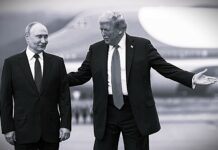
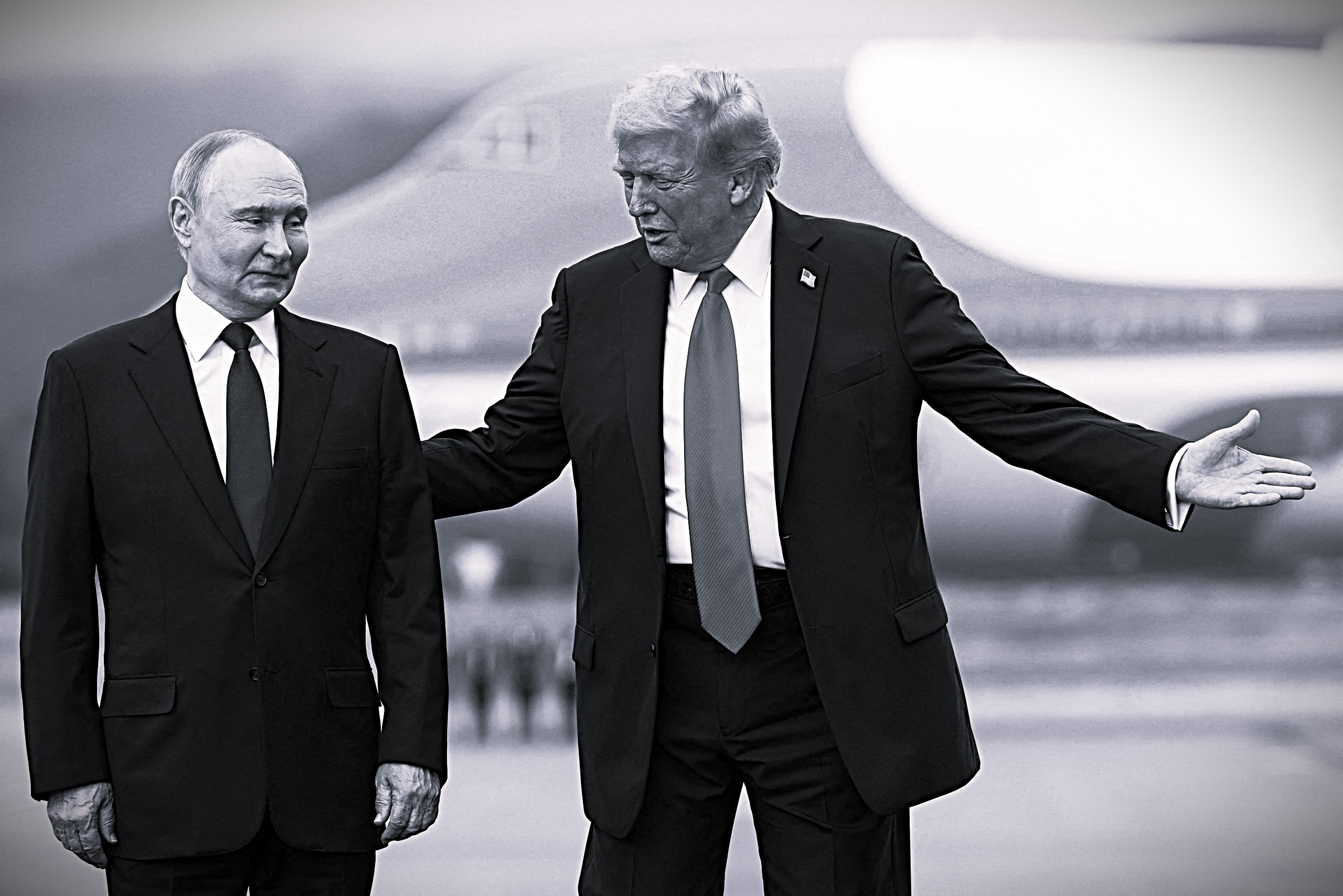
At the same time, however, the strategic document seems to commit the US government to taking a step back from its post-World War II role as universal policeman, controller of the entire planet. The text states: “After the end of the Cold War, American foreign policy elites convinced themselves that the permanent dominion of the United States over the entire world was in the best interest of our country. However, the affairs of other countries concern us only if their activities directly threaten our interests. Our elites have severely underestimated America’s willingness to forever assume global burdens that the American people did not believe were linked to the national interest.” Consequently, together with the refusal to continue feeding transnational structures, from the UN down, as well as to practice “free trade” while instead reviving the most blatant protectionism (with the ubiquitous policy of tariffs) and breaking the USA-Europe strategic axis, the Trump administration seems to want to send a message to the two other imperialist powers, China and Russia, proposing a kind of neo-Yalta Pact, with an agreed-upon division of world areas where each of the three can prevail by managing economies and territories. The signal sent to Russia is transparent, promising the blocking of NATO expansionism, the abandonment of support for Ukraine, and the recognition of a “defense of national interests” which, as Russian propaganda claims, “forced” Putin to attack Ukraine.
The final piece of the Trumpian strategic puzzle concerns the disintegration of the balances between the powers of US liberal democracy, of those checks and balances, the pride of US ideological propaganda. Within a few months, all the cornerstones of this “guarantor” structure have been assaulted by Trumpism. Certainly, the disavowal of Biden’s previous electoral victory, with attempts to falsify ballot results and with support for the mini-insurrection of Capitol Hill and the assault on the Capitol, “absorbed” by state powers without consequences for Trump, had already downsized the presumption of possessing a democratically impeccable institutional architecture: but the accelerations in the second presidential term have been explosive. From the mindless introduction of global tariffs that turned a myriad of former allies against the United States, to the imposition of ICE, a sovereign’s militia, a semi-private army with a license to kill and total immunity (see the chilling cases in Minneapolis), formally anti-immigration but used as an alternative to state territorial control, in a logic of civil war; from the aggression against Venezuela and the one threatened against Greenland to the establishment, with the Board of Peace, of a kind of private UN with a parade of autocrats, dictators, and criminals: all these steps have revealed how even the seemingly most solid liberal-democratic order can be revolutionized by a politics that invokes for a neo-sovereign, endowed with vast popular consensus and limitless aggressiveness, all national and global powers. Therefore, if we look at the substance, beyond the often surreal form, of the Trumpian strategic construct, we are not facing the program of a crazy emperor à la Caligula (even if the idea of making his horse a senator was perhaps a legend), but a rational and structured plan. However, paraphrasing Hegel, if everything that is real (Trump’s global action) is rational, it is not necessarily realistic: indeed, the realization of the entire strategy appears decidedly improbable. And for a long series of reasons.
The extreme difficulties of peacefully partitioning the world and consolidating Trump’s “monarchy”
The self-destructive effect of the United States’ break with its “historical” allies has already become apparent, both economically (global tariffs and the extreme arrogance of their imposition) and politically and militarily (the progressive abandonment of Ukraine, but also of the Syrians, the Kurds, etc.). But perhaps the overall cost of this hubris of aggressive self-sufficiency is still unclear. “The United States will no longer have reliable friends or allies and will have to depend entirely on its own strength to survive and prosper. This will require more military spending, not less, because access to resources, markets, and strategic bases, which Americans have enjoyed until now, will no longer be guaranteed by alliances, but will have to be defended alone against other great powers…Trump and his supporters seem to believe that allies will adapt to being subordinated to the United States precisely at the moment when the United States abandons them, exacts a heavy economic toll from them, and tries to ‘concert’ with the powers that directly threaten them (Robert Kagan, America vs. the World, Atlantic).” Greater economic and military spending that the United States would have to face while its public debt in 2025 reached the astronomical figure of 38 trillion dollars (120% of GDP), having to pay almost 1 trillion dollars annually in interest alone, or about 20% of its tax revenue. Kegan continues: “The United States’ great strength in recent years has been its global alliance system: when Russia and China went to war, they went alone, but the United States had the support of dozens of allies… America is large and powerful because it has—had—a system of solid alliances, with military bases spread everywhere: and now Trump’s supporters expect European and Asian countries to join the United States whenever the United States needs it, while receiving nothing in return?”
Equally unrealistic seems the hope that Russia and China will accept the offer of a neo-Yalta, a peaceful division of the world, with the agreed-upon division of areas of influence. The position of the “sovereigns” of China and Russia is markedly different from that of Trump, who can count on a historic basis of hegemony in the Americas. Russia is an economic dwarf not only compared to the US and China, but also to Japan and Germany, and is even surpassed by Italy, oil and gas aside. Consequently, it is an extremely aggressive imperialism in terms of warfare, lacking other tools to extend its influence around the world. Putin’s attempt to restore the USSR’s power was purely military, from Georgia to Crimea, from Donbass to Syria and Nagorno-Karabakh, from mercenaries in half of Africa to the invasion of Ukraine. But the reconstruction of Soviet power is still a long way off, and not because of NATO. The argument that Ukraine is being attacked out of fear of having NATO on its borders is a colossal hoax that only Putin’s “campites” (those for whom anti-imperialism is such only when it conflicts with the US and Israel, whose enemies, whether despicable dictatorships like Iran’s or repressive “neo-Tsarist” regimes like Russia’s, are by default allies) can sustain. Not only has there never been any possibility of Ukraine joining NATO, but paradoxically, the greatest NATO expansion to Russia’s borders was brought about by Putin himself, who attacked Ukraine and pushed, not only Sweden but also a historically neutral country like Finland, which shares almost twice the distance with Russia as Ukraine does, to join the Alliance. The new “sovereign” Putin wants to extend his imperialism by roaming across continents, but in particular he wants to conquer Ukraine not for the military security of its borders but out of fear that a country, historically its “twin,” with its choice of European liberal democracy, might “infect” the Russian population. But while Trump can cajole Putin with his disengagement from Ukraine, he can’t go further, truly guaranteeing him areas of “protected influence,” either in Europe or in the Middle East—where, in addition to Israel’s disintegration of Russian strongholds in Syria, Lebanon, and Iran, the massive US presence in the management of Gaza, and the recent repeated threats to Iran, further demonstrate that US imperialism has neither “isolationist” intentions nor a genuine intention to limit its intervention to the “Western camp” alone—especially not in Central and South America, where Trump’s strategy aims to dissolve all pro-Russian “strongholds.”
As for China, it has no fear of Trump’s reckless protectionism. In 2025, despite a 20% loss in Chinese exports to the US, they increased by 26% to Africa, 13.4% to Southeast Asia, and 8.4% to Europe, with a total surplus of 5.5% (approximately $3.77 trillion) and a trade surplus of $1.189 billion. This is without considering that the Chinese central bank holds at least $1 trillion in US debt. More generally, the strength of China’s economic and political power goes far beyond these figures, however significant. Compared to US state neo-capitalism, China’s, consolidated for decades, offers a public-private partnership guaranteed by the Communist Party’s state hegemony over private multinational capital operating in China. This is such that it is unaffected by US dependence on the private powers of Silicon Valley and the like, which manage a large portion of US technical and military development. Furthermore, Xi Jinping’s “sovereignty” is far more solid than Trump’s in the US, relying on the powerful backing of the CCP’s state bourgeoisie. This makes it resemble a “constitutional monarchy” that does not face periodic elections, while Trump’s supposedly “absolute” sovereignty is forced to depend on electoral uncertainties. However, Trump cannot guarantee China a sphere of influence equal to that which he claims for the US in the Americas, because, in addition to its unfulfilled ambitions on Taiwan, China cannot even secure the “subjugation” of Japan and South Korea, sub-imperialist powers in the region, while in Venezuela it has suffered a halt in its expansion in Latin America.
Finally, the stabilization of Trump’s sovereignty in the United States also appears highly uncertain. If it’s true that the glorified US liberal democracy has proven permeable to brutal neo-monarchical incursions and Trump’s brazen temporary dominance over other powers, the consolidation of this sovereignty appears truly uncertain. And not only because Trump’s power, however overwhelming it now seems, must contend with various electoral deadlines, starting with the midterms, as well as strong popular reactions to the ICE violence; but even more so because the neo-monarchical project operates with the adventurism of an unscrupulous gambler on a global scale, magnifying the field of America’s enemies and reducing to the bare minimum, if not to nothing, that of its trusted allies. Furthermore, the economic fragility of the United States contrasts with the Confucian “serenity” of global expansion, through economic rather than military conquest of territories, of the powerful and original Chinese state capitalism, which, in my opinion, would be destined to win the contest if it remained at the economic level. All this leads me to consider a peaceful division of the world between the three imperialisms highly unlikely, given that, contrary to the illusions of pacifism, multilateralism (which also includes other sub-imperialisms such as India, Turkey, and Saudi Arabia) is far from guaranteeing the peaceful development of the planet, appearing instead to be a harbinger of even greater instability and bellicosity. Therefore, any eventual division could only be brutally “armed.” In short, Trump is more likely to win a Nobel Peace Prize than a Nobel Prize for War, perhaps in competition with Putin. Putin, however, at least had the foresight to call the ferocious and criminal aggression against Ukraine a “special military operation,” while Trump even fought to rename the US Department of Defense the Ministry of War.